
Independent author of Built by Chemistry. Every edition sourced from EN / ANSI / BIS / ASTM standards or peer-reviewed literature. About →
The walls of an Indian residential building are not made of bricks and cement. They're made of a sequence of decisions about price, availability, and substitution that begin a long way from the construction site.
Most of those decisions are now broken.
What happened, in three dates
On 28 February 2026, the United States and Israel struck Iran. The strikes killed Supreme Leader Ayatollah Ali Khamenei. His son Mojtaba Khamenei has taken over the top job in Tehran.
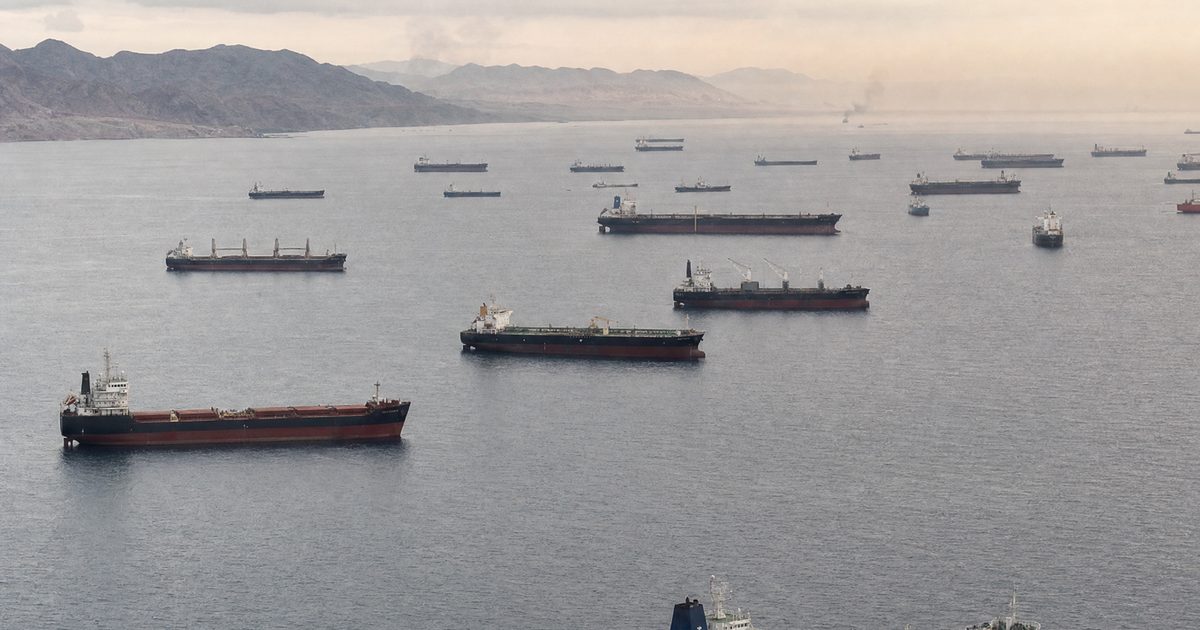
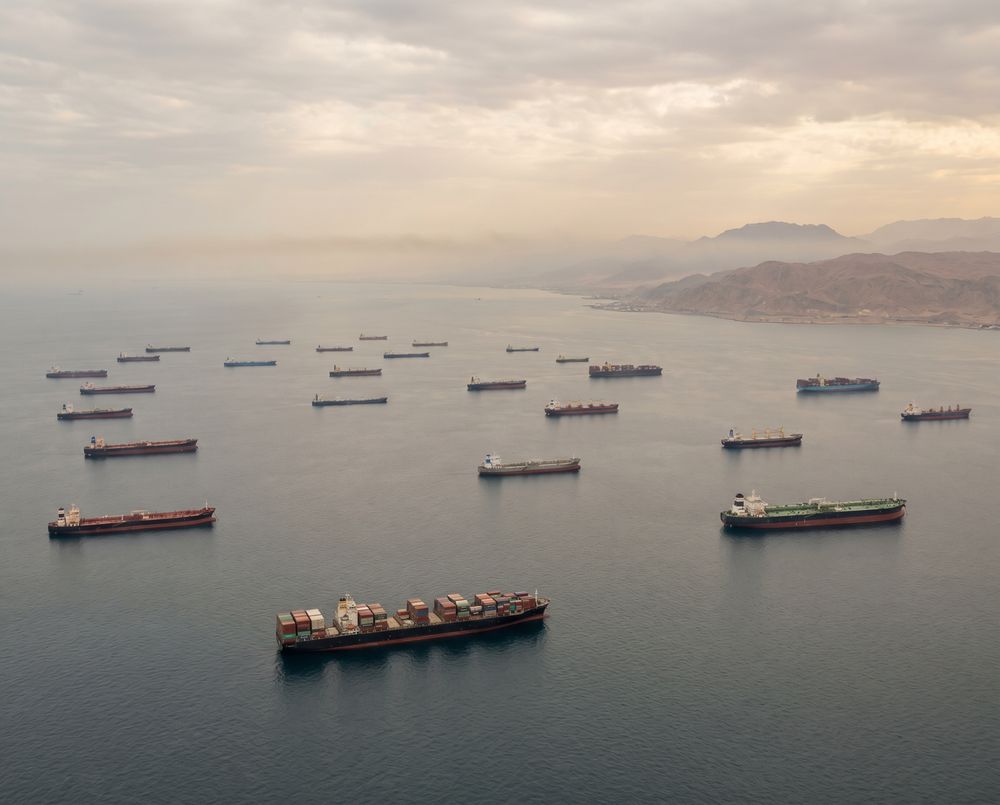
On 2 March, the Islamic Revolutionary Guard Corps declared the Strait of Hormuz closed. An IRGC commander said any ship attempting to pass would be set ablaze.
On 5 March, the international P&I insurance market began cancelling war risk cover for vessels in the area.
By the first week of March, tanker traffic through the strait dropped roughly 90%. The International Energy Agency launched the largest emergency reserve release in its history. All major carriers — Maersk, CMA CGM, MSC, Hapag-Lloyd — suspended Hormuz transits. In a normal week, roughly 20% of the world's oil and a similar share of LNG passes through that waterway. For three months it has effectively passed through none of it.
This is the supply shock. Now the numbers.
Crude, naphtha, and the polymer chain
Brent crude jumped 10 to 13% in the first days after the closure and has stayed above US$ 100 a barrel since. Analysts have warned the medium-term path goes to $120, with $200 not off the table if the crisis extends.
For construction chemicals, the crude price isn't the headline. The headline is naphtha — the petroleum fraction used by steam crackers to produce ethylene, propylene, and downstream the polymers we all consume.
Naphtha CFR East Asia rose from US$ 619-621 a tonne on the eve of the war to US$ 1,077-1,079 a tonne on 17 March 2026. A 74% surge in roughly two weeks. The reason is structural, not sentimental: nearly 84% of Middle Eastern polyethylene exports depend on the Strait of Hormuz. When the strait closes, both the feedstock supply and the finished polymer export collapse at the same time.
The result is that Indian polymer prices have moved fast, and they have moved a lot.
Reliance Industries issued three rounds of price increases between 3 and 11 March, with cumulative polyethylene hikes of ₹35,000-50,000 per metric tonne depending on grade. Indian Oil matched with similar increases across four rounds. By mid-April 2026, ICIS estimated Indian polymer prices were up roughly 60% since the war began. Reliance Industries and Chemplast raised PVC prices by up to ₹6,000 per tonne effective 25 March 2026.
For my industry this matters in two specific places. Polymer-modified mortars and tile adhesives depend on redispersible polymer powder (RDP) — most of which is produced in China from vinyl acetate, ethylene, and other olefin derivatives. The vinyl acetate feedstock chain is downstream of the same petrochemical complexes that have been disrupted. Cellulose ethers like HPMC and MHEC come mostly from Chinese producers as well. The China-India container route is now operating with a Cape of Good Hope detour rather than Suez or direct Indian Ocean transits, adding 14 to 21 days to lead times.
A construction chemistry plant that runs on weekly purchase orders for RDP and HPMC is, right now, planning at six-week horizons instead of two.
Cement: pet coke, coal, and an export market in shock
Cement is the other half of the conversation. Indian cement producers use pet coke and coal as their primary kiln fuel. Both are sourced significantly from imports.
Fuel costs surged in India following the Iran war. Coke imports declined sharply due to supply disruptions and higher costs. Domestic coal usage increased to reduce reliance on imports. Packaging costs rose significantly due to polypropylene supply constraints, adding further pressure.
The Bangladesh case is a useful proxy because it imports more of its cement inputs than India does and the price signal is cleaner. Bangladesh's clinker import costs have risen from about US$ 42-43 per tonne to nearly US$ 53 per tonne, driven by tighter supply and higher freight charges. That's a 23% jump in the largest non-energy input of cement production, on a route that depends on Hormuz-area shipping.
In the United Kingdom, where the supply chain exposure is mostly through energy and freight rather than direct Gulf imports, March 2026 saw the sharpest monthly increase in building materials costs in nearly three decades according to S&P Global's UK Construction PMI.
In the United States, construction materials economist Ed Sullivan noted that the single variable that decides where this goes is duration: the longer Hormuz traffic remains disrupted, the more oil prices rise, supply chains are stressed, and inflation embeds itself in interest rates — to the detriment of construction activity.
I have been in this industry long enough to recognise this pattern. The 2022 invasion of Ukraine produced a similar wave: energy spiked, polymer prices doubled, the Indian construction chemicals industry passed the cost down the chain or absorbed it where it could not. The current shock is bigger.
The pieces that nobody is talking about
Two things sit in the second order of this disruption and almost nobody is pricing them properly yet.
The first is sulphur. The Gulf region produces a substantial share of global sulphur as a byproduct of oil and gas refining. Linesight's analysis estimates the war has put nearly half of global sulphur exports at risk. Sulphur is essential for sulphuric acid, which is essential for copper ore processing, which is essential for the wiring that goes into every building. Copper price effects from this chain are still propagating through the market.
The second is aluminium. Gulf countries produce around 9% of global aluminium supply, much of it for export. The Qatalum smelter in Qatar began shutting down on 3 March because its gas supplies were suspended. Bahrain's Aluminium Bahrain smelter declared force majeure on its contracts because it could not ship product. Aluminium goes into curtain wall systems, into window frames, into roofing in some markets. Its price is now a function of how quickly Gulf smelters can be restarted on alternative fuel sources, and that timeline is unclear.
LNG is the third piece. Qatar accounts for about 20% of global liquefied natural gas supply and virtually all of its exports must pass through Hormuz. QatarEnergy declared force majeure on long-term LNG delivery contracts with South Korea, China, Italy, and Belgium. European gas prices have risen sharply. Anyone running an energy-intensive industrial process anywhere on the Eurasian gas grid is now operating with a different cost base.
For construction chemicals, this all funnels into the same place: every polymer-modified product on the market is built on petrochemical feedstock whose price is now being set by a war.
What this changes inside an R&D office
When I wrote about the silent reformulation of mortars for AAC blocks, I described it as a quiet adjustment of polymer content and compressive strength to match a new substrate. That was a normal market-driven product development cycle.
The current adjustment is different. It's the reformulation forced by raw material prices that have doubled in some categories and become unpredictable in others.
What R&D teams do in this situation is open the recipe book. We look at every polymer-modified product on the line and ask three questions:
- Which polymer content can be reduced without losing performance?
- Which polymer can be substituted with a cheaper grade?
- Which formulation should be paused until the market settles?
Cellulose ether content gets cut where the application allows. RDP dosage gets challenged. Inert filler ratios get adjusted. Some products get withdrawn from the market temporarily because their margin disappears at the new feedstock prices.
None of this is visible to the contractor buying a bag of tile adhesive at the depot. The bag looks the same. The performance, in some cases, will be measurably different.
How long does this last?
The honest answer is nobody knows. ICIS estimated on 13 April 2026 that it will take 12 to 18 months for Middle East polymer exports to recover even after the Strait of Hormuz reopens. Recovery involves multiple sequential steps: ceasefire, reopening, insurance market normalisation in months, carrier service resumption, force majeure unwinding at production facilities, inventory rebuilding, and logistics chain restoration.
Analysts have modelled scenarios ranging from weeks to years. Supply chain planning should assume disruption persists for at least 3 to 6 months.
What is certain is that the Indian construction chemicals industry will absorb part of the cost, pass part of it down, and quietly reformulate the rest. The contractor on a Mumbai basement — like the one I wrote about in the edition on hydrostatic head testing — will keep specifying products by brand name and trusting that the bag in front of him performs the way the datasheet says.
Whether that bag actually does perform the same as the one he used six months ago is the question nobody is going to print on the label.
The five things that datasheets don't declare — and how to read between the rows before you specify — are the subject of edition 8 on what construction chemicals datasheets don't tell you.
— Guillermo
Ed #10 — how the CCTS carbon scheme and rising kiln fuel costs are finally making LC3 economics viable in India.
Follow-up (2026): Hormuz, Bab el-Mandeb and your tile adhesive - what actually happened to construction-chemical feedstock once two straits were at war at once.
- Concrete cover is a corrosion clock. Double the depth and you buy four times the years before the steel starts to go.
- Two waterproofing systems on one basement wall. When the redundancy works, and when they fail together.
- LC3 cement: -40% CO2, same compressive strength. India's cement industry doesn't use it. Here's why.