Construction Chemicals Edition #26 ·
Why your C2TE-S1 stops working at 60×60
Large format tile adhesive: S1 or S2? What changes above 60×60, and the size rules India's IS 15477 and Spain's UNE 138002 write that EN 12004 never did.
Read edition →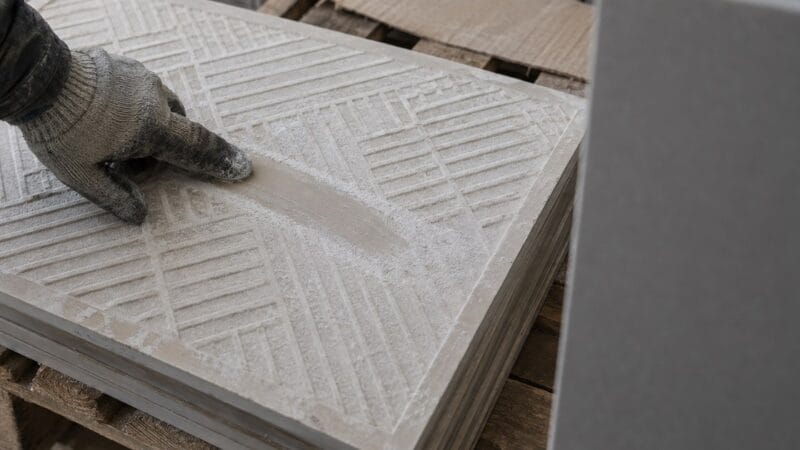
Construction chemistry decoded for project managers, contractors, and specifiers. Independent analysis. No brand bias. Verified sources only.
Construction chemistry is the applied science of the specialty chemical products that make modern building materials work: tile adhesives, waterproofing membranes, concrete admixtures, repair mortars, sealants, insulation systems and everything in between. It is the discipline that turns cement, water and aggregate into a specification that either holds up for thirty years on a coastal wall or fails at the joint in three.
Built by Chemistry is an independent weekly newsletter on construction chemistry, written from the intersection of R&D lab, plant floor and jobsite. Every edition takes one product family, one failure mode or one specification standard — EN 12004 tile adhesives, EN 1504 concrete repair mortars, EN 1928 and DIN 18533 waterproofing systems, IS 456 concrete cover and chloride ingress, IS 15477 Indian tile adhesive classes — and explains what the standard actually says, why the system fails in the field, and what a specifier should ask before signing off. No brand affiliations, no datasheet re-writes, no marketing filler.
Topics covered so far include cementitious tile adhesives and grouts, below-grade waterproofing (crystalline admixtures, PMC liquid membranes, sheet membranes), chloride-induced corrosion and repair mortar classes R1 to R4, drymix mortars, AAC blocks and thin-bed mortar, LC3 low-clinker cements, hydrostatic head testing, ETICS thermal insulation, and the practical differences between European (EN) and Indian (BIS/IS) standard families. The archive is at All editions; the topic hubs at Construction chemicals, Tile adhesives, Waterproofing, Mortar and AAC, Thermal performance and Specifications.
Every edition sits inside one of three technical clusters. Pick the pillar that matches your problem and browse the linked editions.
Below-grade membranes, flat-roof failures and the interface problem. EN 1928 · DIN 18533 · BS 8102.
5 editions → Pillar 02Datasheet decoding, C1/C2, S1/S2, T and E. EN 12004-1/-2 · IS 15477 · the gap between the bag and the site.
3 editions → Pillar 03Single vs double buttering, thixotropy, coverage, and the 15 checks that catch a bad install. EN 1308 · EN 1346.
2 editions →Latest
Construction Chemicals Edition #26 ·
Large format tile adhesive: S1 or S2? What changes above 60×60, and the size rules India's IS 15477 and Spain's UNE 138002 write that EN 12004 never did.
Read edition →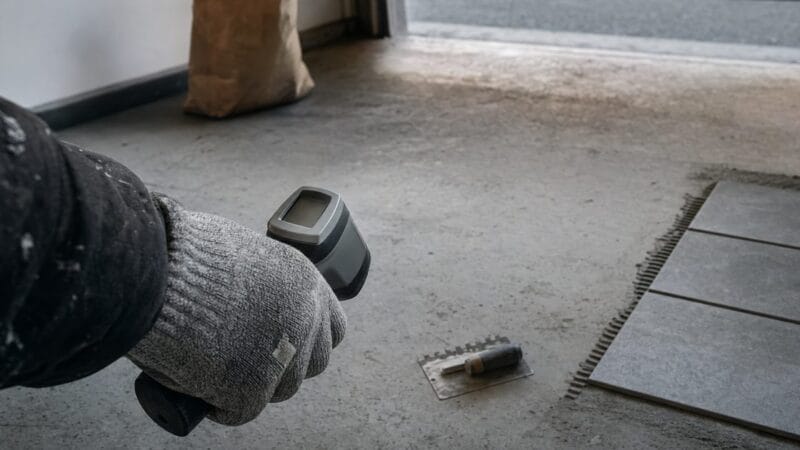
Tile adhesive drying time is not on the bag. How humidity and temperature slow hydration, when to grout, and why 23 °C on the datasheet is not your site.
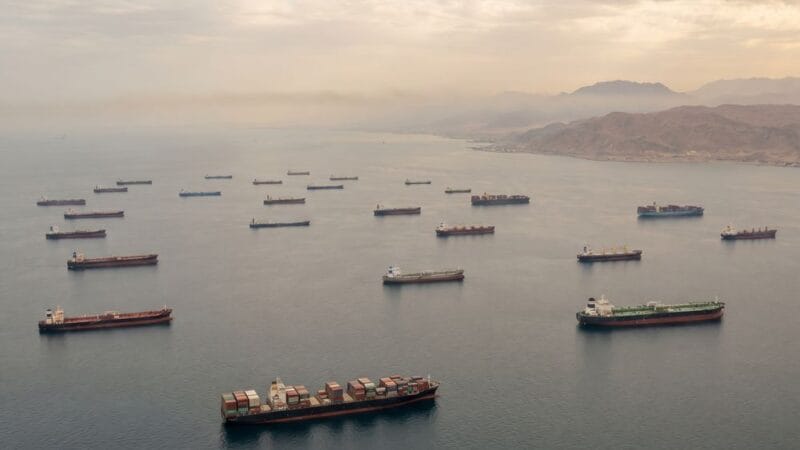
Two straits at war in 2026 squeeze construction-chemical feedstock - the binder in your tile adhesive - at source, not just freight. What moved, what did not.
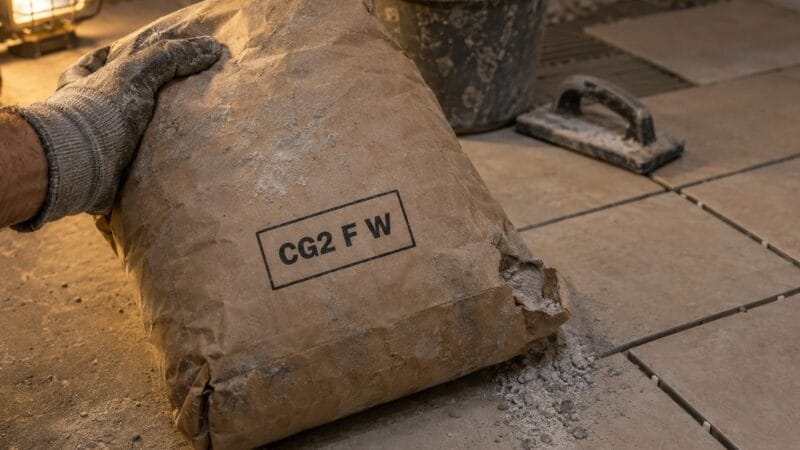
Grout classification without the mystery: what CG1, CG2, W, A, F and RG certify on the bag - and why the EU, US and Indian standards do not convert.
About the newsletter
Every edition decodes one topic — tile adhesives, waterproofing, thermal insulation, structural repair — using published standards (EN, IS, BS) and field observations. No brand mentions. No sponsored content. No invented data.
Written by Guillermo Ferrer Vicente, a construction chemicals professional.
About BBCWhat you get each Thursday
Free subscription
Join readers across the construction industry who want the chemistry behind the decisions, not the brand claims.
No spam. Unsubscribe anytime. Privacy policy.
We use cookies to understand how readers use BBC and improve the newsletter. Read our Cookie policy.
Have a paper or a site failure the industry should know about?
We publish contributions from R&D chemists, field engineers and academics. Full byline, no brand ties.
Contribute →