Why your C2TE-S1 stops working at 60×60
Large format tile adhesive: S1 or S2? What changes above 60×60, and the size rules India's IS 15477 and Spain's UNE 138002 write that EN 12004 never did.
Every edition of Built by Chemistry: construction chemistry decoded, one topic at a time.
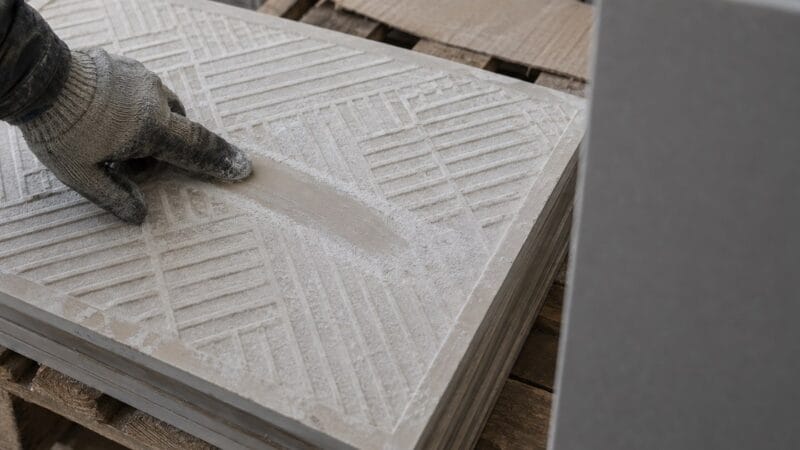
Large format tile adhesive: S1 or S2? What changes above 60×60, and the size rules India's IS 15477 and Spain's UNE 138002 write that EN 12004 never did.
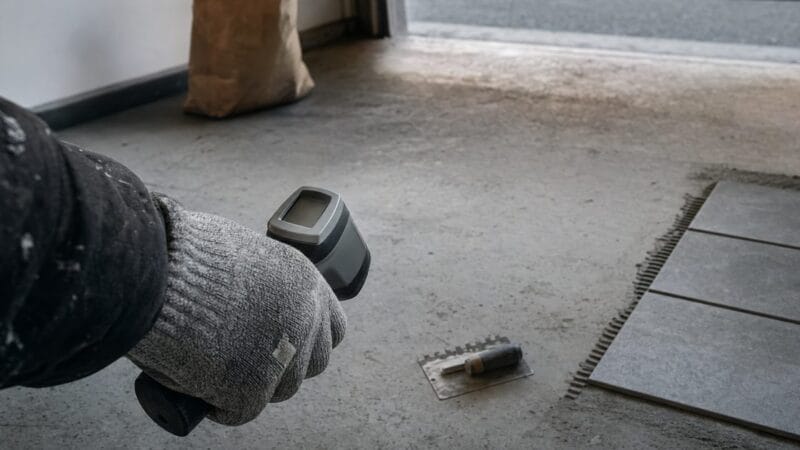
Tile adhesive drying time is not on the bag. How humidity and temperature slow hydration, when to grout, and why 23 °C on the datasheet is not your site.

Two straits at war in 2026 squeeze construction-chemical feedstock - the binder in your tile adhesive - at source, not just freight. What moved, what did not.
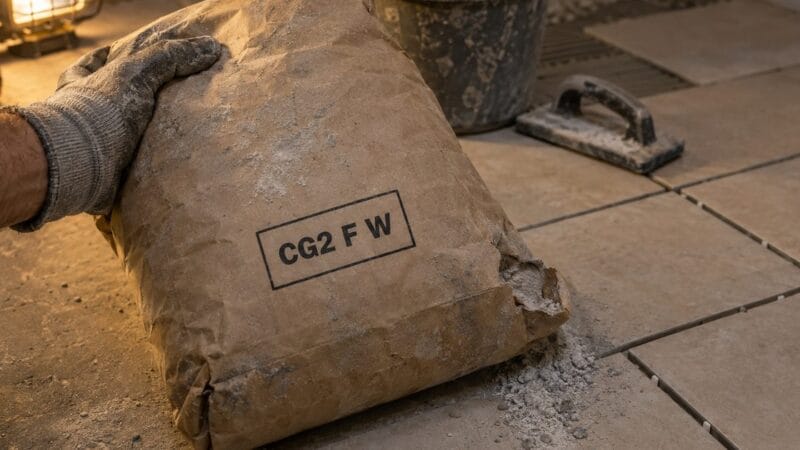
Grout classification without the mystery: what CG1, CG2, W, A, F and RG certify on the bag - and why the EU, US and Indian standards do not convert.
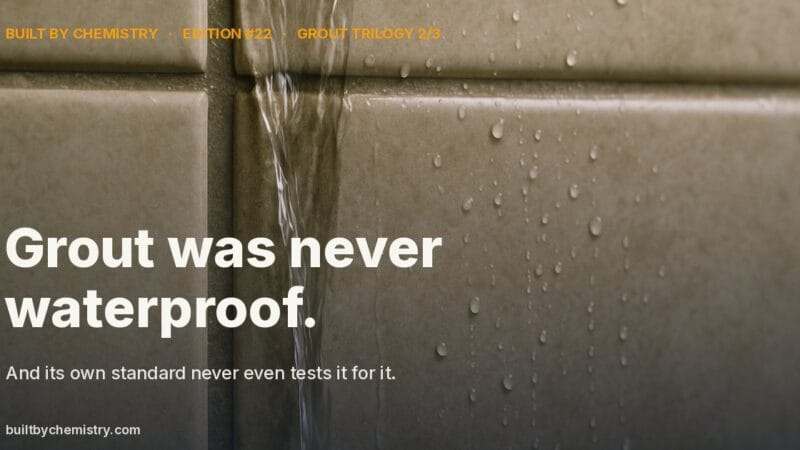
Tile grout is porous by design - its own standard never even tests it for waterproofing. What the W class really buys, and what keeps water out.
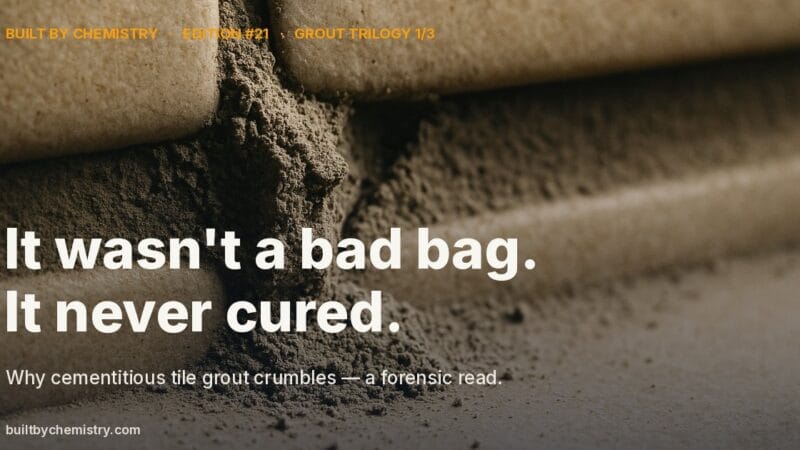
Crumbling, powdery grout is almost never a bad bag. The joint is the hardest place in the whole system to cure - why it happens, and a 30-second site test.
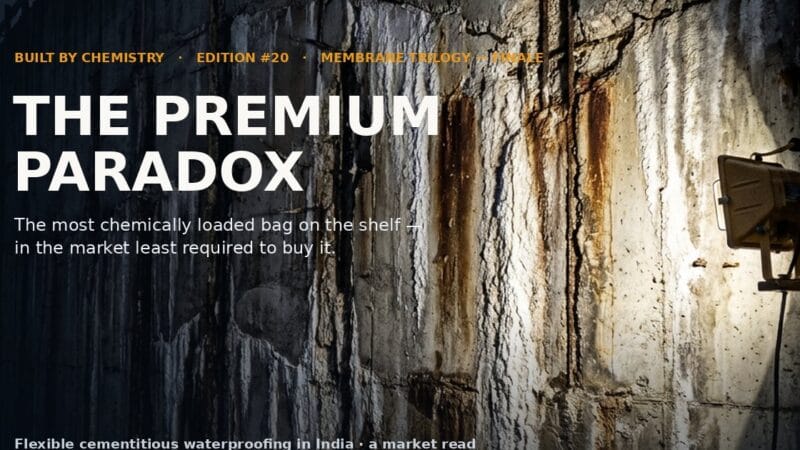
With no product standard and an 81%-unskilled workforce, who buys India's most chemically loaded waterproofing membrane - and why it quietly pays off.
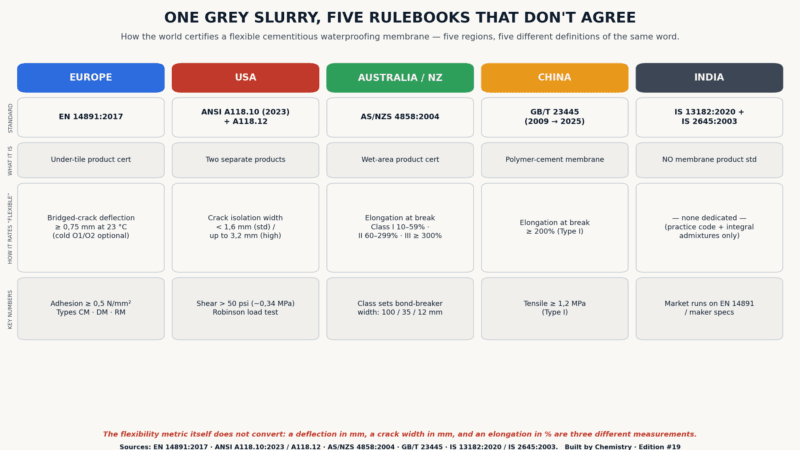
EN 14891, ANSI A118.10, AS 4858, GB/T 23445 and India's IS codes each rate a cementitious waterproofing membrane differently - "flexible" doesn't convert.
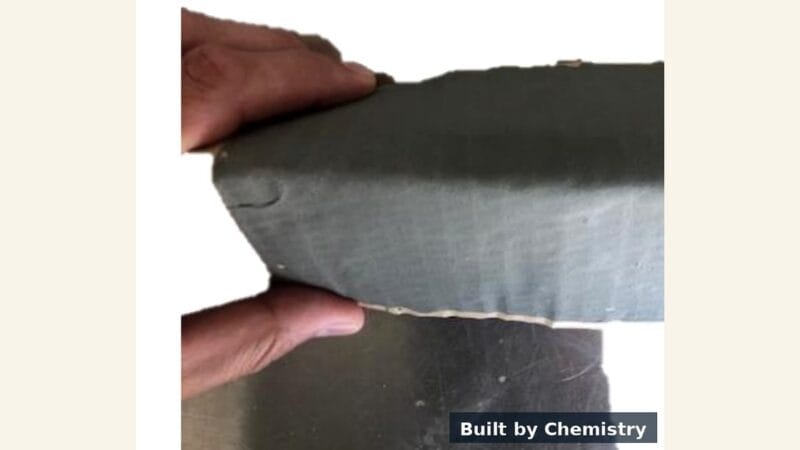
20% polymer, one grey slurry, flexibility built on site - how a cementitious membrane earns "flexible" under EN 14891, and where the class breaks.
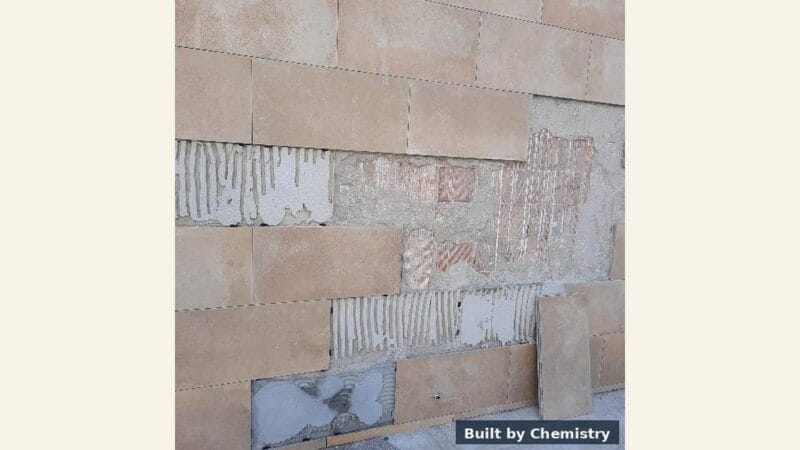
A tile-adhesive failure is almost never the bag. Lift a bonded tile, read its back, and the wall shows who lost it: coverage, open time or water.
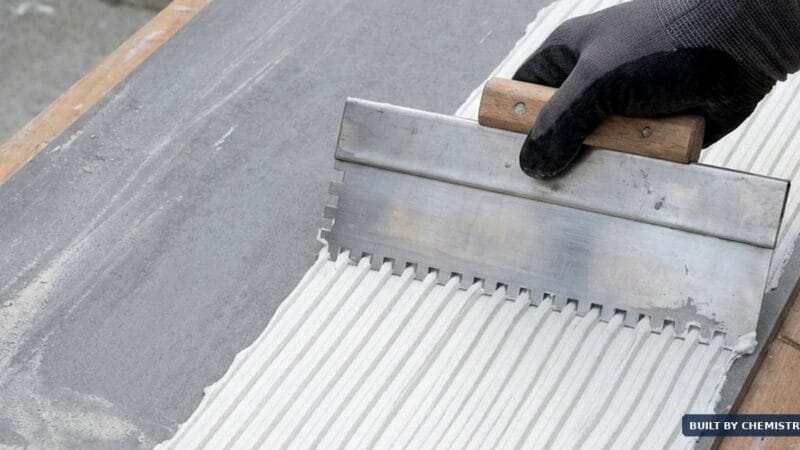
Open time, setting time, pot life, adjustment time - four clocks tile-adhesive markets run as one. Where the 30-minute number quietly breaks.
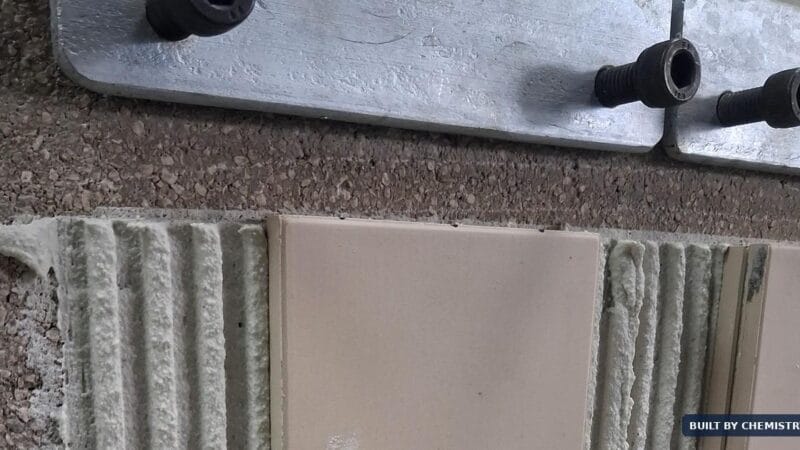
Thixotropy is why a tile holds on a wall and spreads under the trowel. The rheology, the yield stress that carries the tile, and why datasheets lie at 35 °C.
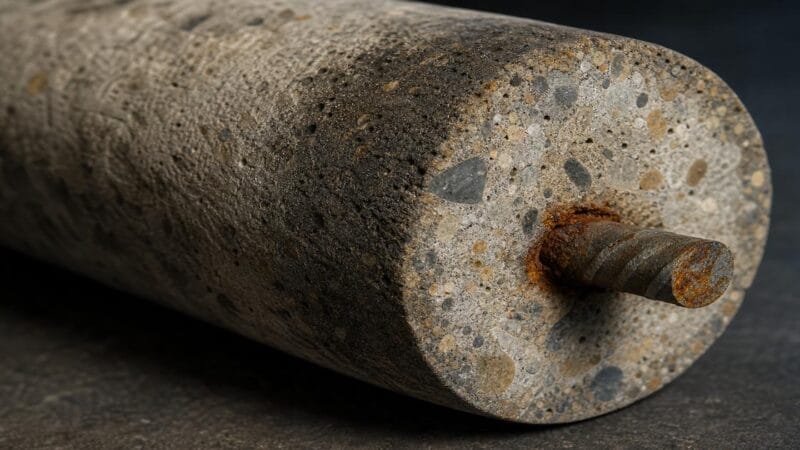
Concrete cover controls when chloride corrosion starts. Why doubling it quadruples the clock, what IS 456 requires, and how to read EN 1504 repair classes.
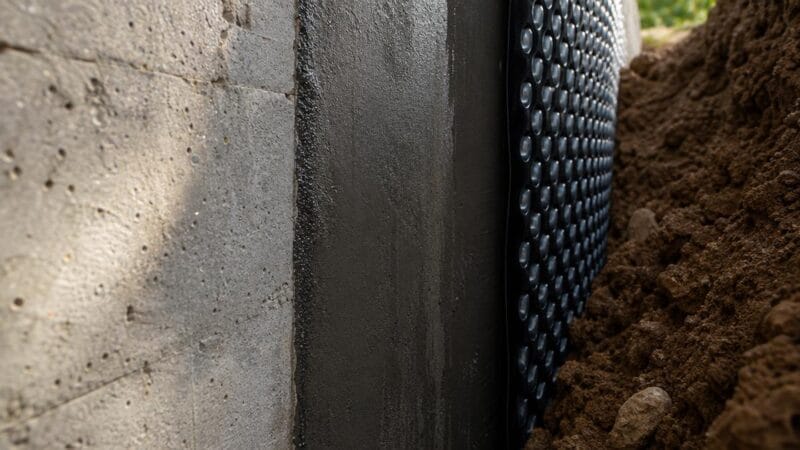
Crystalline admixture plus liquid membrane in a basement wall. When redundancy works, when both fail together, and the sequence that decides between them.

Flat roof waterproofing: 3 failure modes procurement misses. The membrane passes EN 1928, the seam and interface fail in 3 years. What to specify instead.
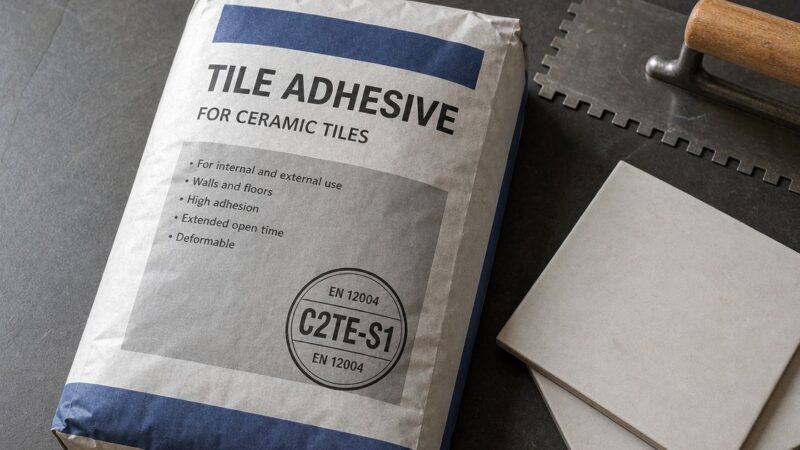
6 characters, 8 test methods, 1 tile adhesive class. C2TE-S1 decoded line by line - and the failure on site it quietly prevents. EN 12004.
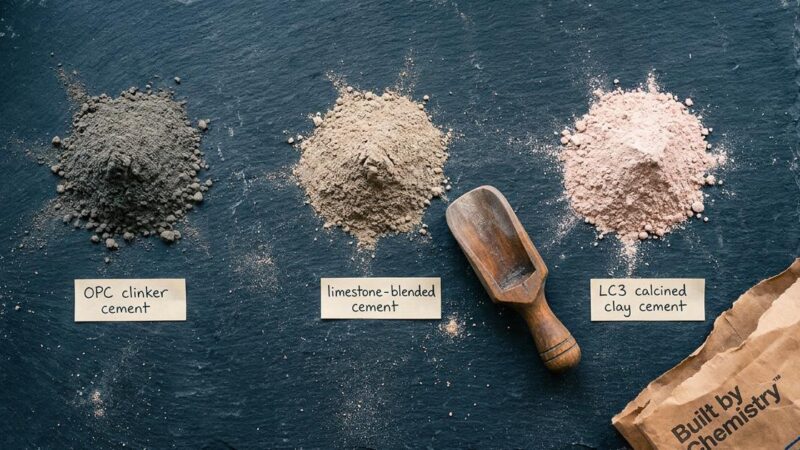
LC3 cement in India: what limestone-calcined-clay concrete actually is, where it already replaces OPC, and where the CCTS rules leave the market waiting.
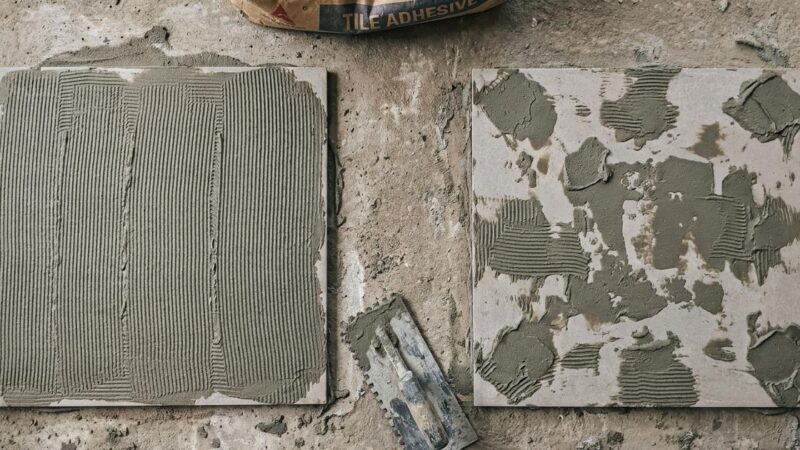
When single buttering stops working: the tile-size threshold for double buttering, and why most tender specs miss it.
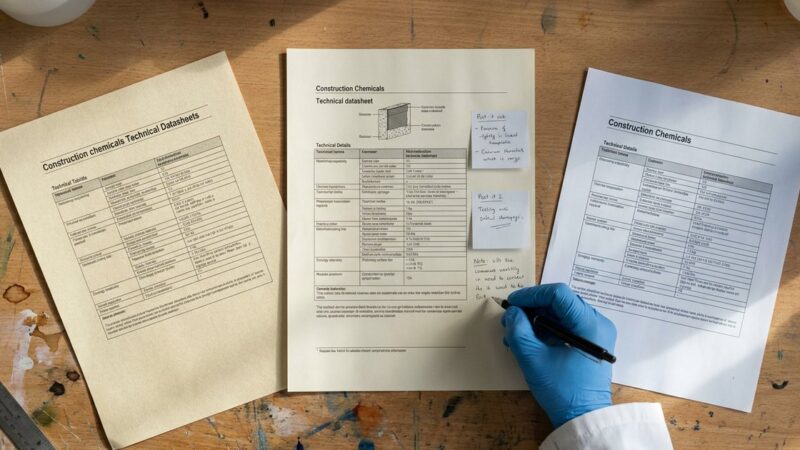
Every construction chemicals datasheet tells you what the manufacturer wants you to know. Five things they leave out, and how to spot them before you specify.

Hormuz blockade and construction chemicals India: which RDP, cellulose ethers and dispersants get squeezed, and the sourcing pivots already underway.
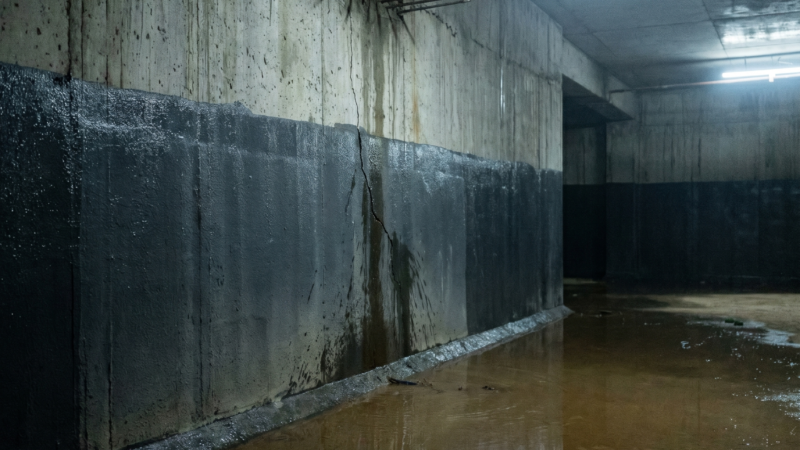
Hydrostatic head testing on basement membranes: what IS 3067 and DIN 18533 W2-E actually measure, and why site results do not match datasheet claims.
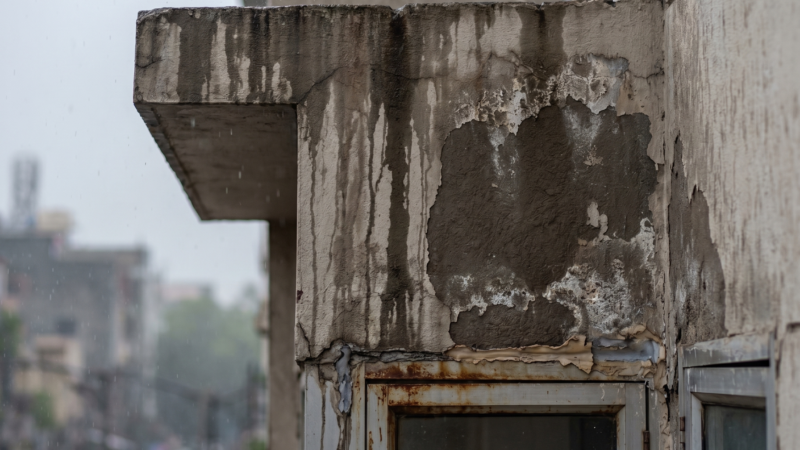
Waterproofing fails across India. Almost never because of the membrane. Three real failures, three real causes, from Delhi to Rajasthan.
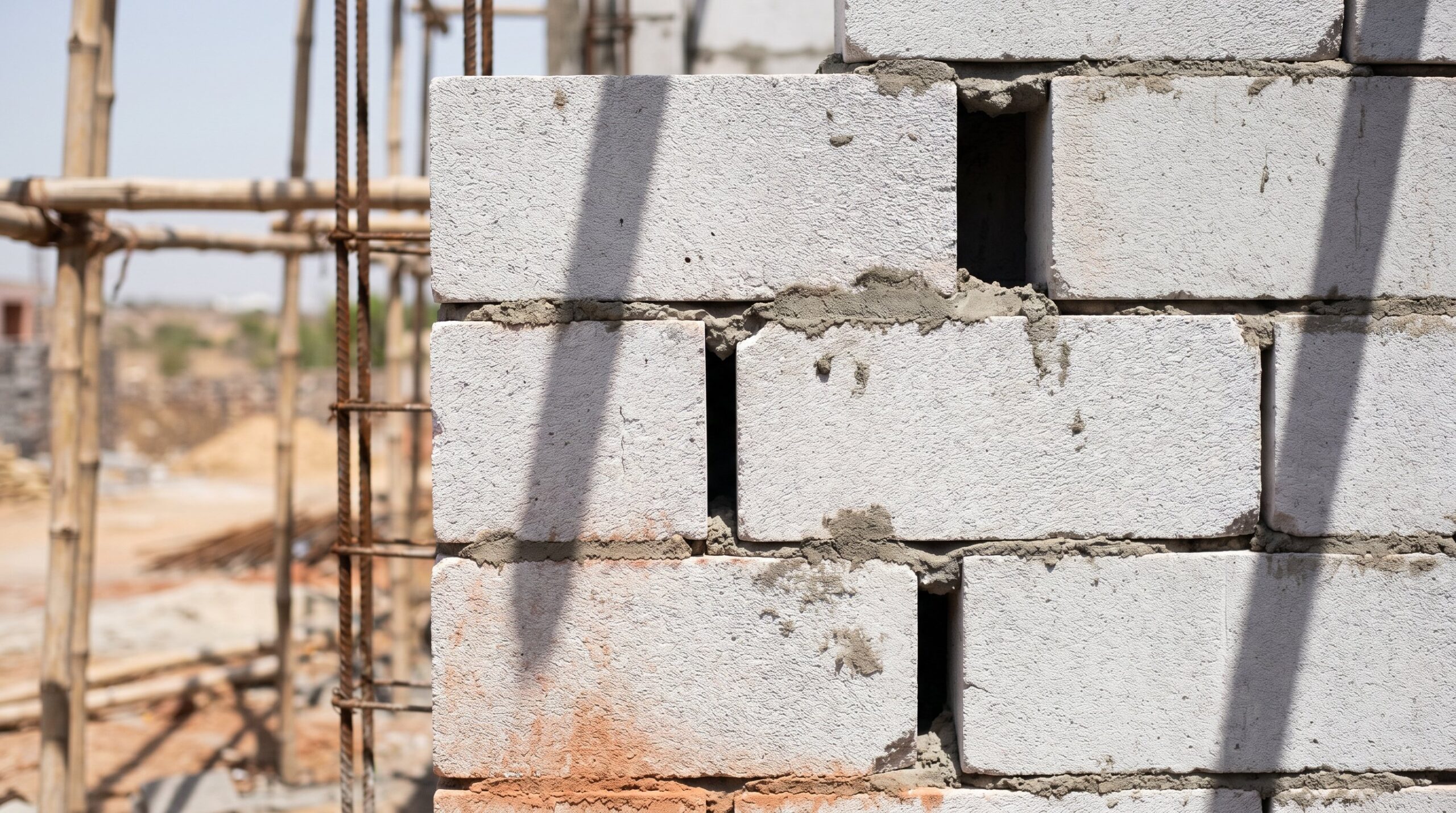
Three weeks ago in Jaipur, AAC blocks went up twice as fast as a brick crew next door. The block won. The installation lost. Mortar chemistry decides.
20 mm of insulation where 50 mm is needed. ECBC applies to commercial, not residential. Same wall fails in 5 years across 28 Indian states. What to spec.
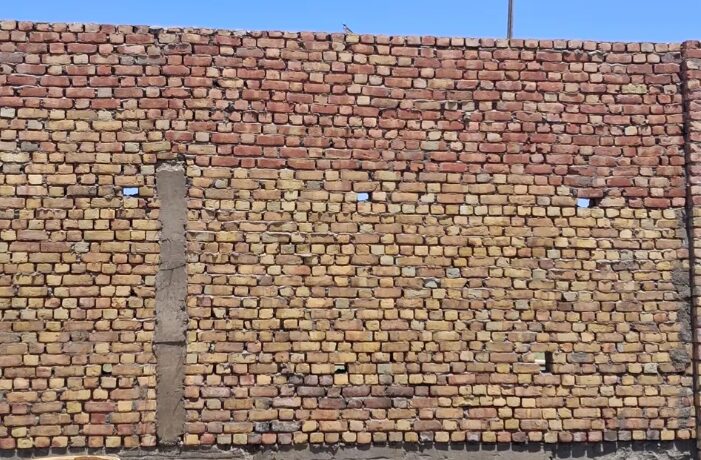
Three repair attempts on the same wall. Three failures. The chemistry of why waterproofing keeps failing, and what the contractor kept getting wrong.

The hollow knock test, vitrified tiles, and why the cement mortar your contractor trusts barely bonds to them. What EN 12004 C2TE-S1 actually means on site.
We use cookies to understand how readers use BBC and improve the newsletter. Read our Cookie policy.
Have a paper or a site failure the industry should know about?
We publish contributions from R&D chemists, field engineers and academics. Full byline, no brand ties.
Contribute →